new work
Readytech
•
AI
Design Ops
AI first design: Leveling up our way of working 🤖
new work
Readytech
•
AI
Design Ops
AI first design: Leveling up our way of working 🤖
OVERVIEW
As we experiment, build, deploy, prompt, and create our way to the future of design workflow and process, I am noticing designer capacity opening up, new opportunities to contribute at all stages of product development emerging, and what defines a designer is broadening.
2x Product
2x Design
4x Dev
OVERVIEW
As we experiment, build, deploy, prompt, and create our way to the future of design workflow and process, I am noticing designer capacity opening up, new opportunities to contribute at all stages of product development emerging, and what defines a designer is broadening.
2x Product
2x Design
4x Dev
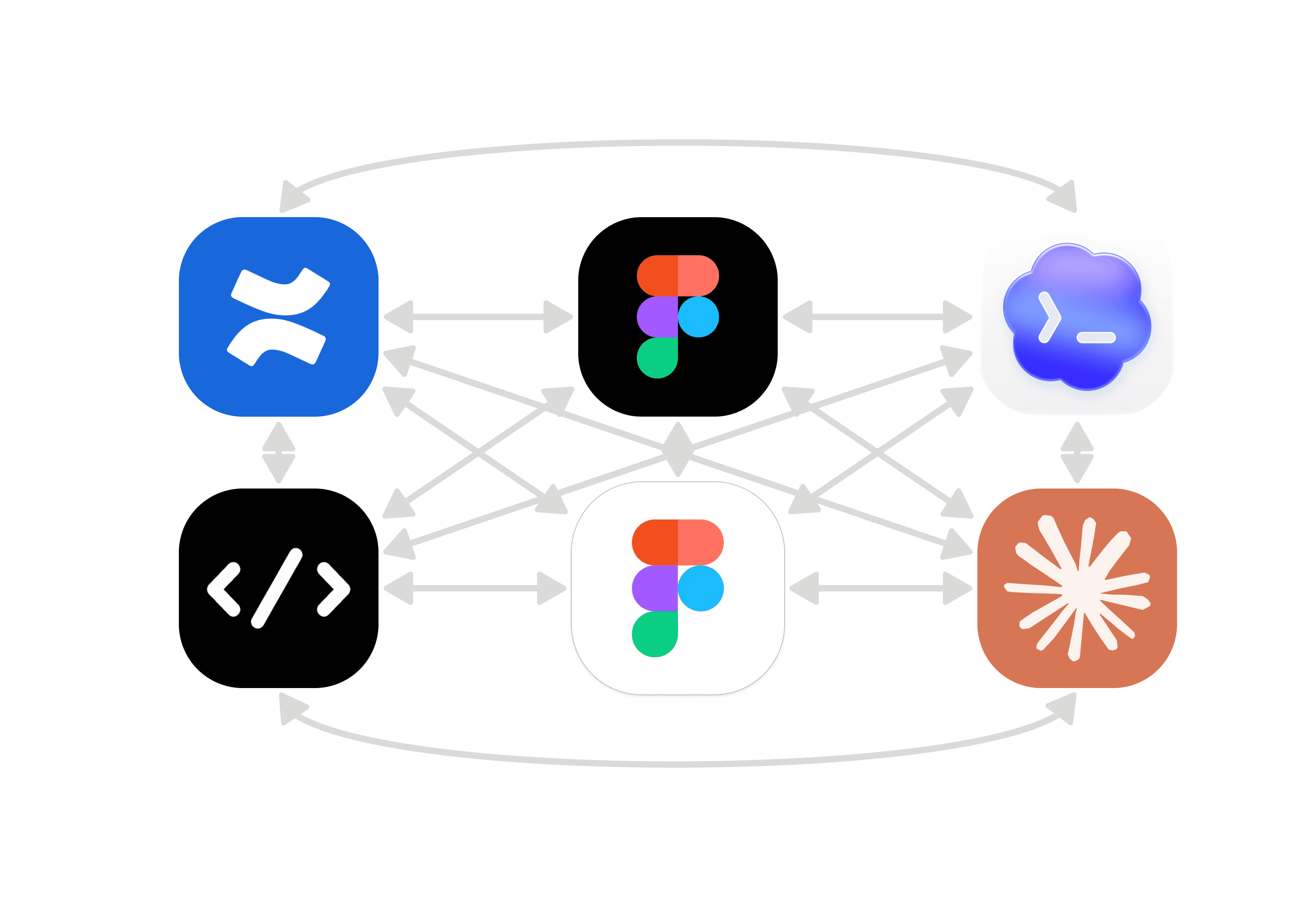
Our stack is in constant flux, but today its:
Codex/Claude Cowork | Consume Confluence articles, requirements documents, Jira tickets, and Figjam or Figma files. Output Confluence articles and Figjam visualisations.
Figjam/Figma/Claude Design/Claude Code | Ideate and create via all mediums to rapidly find a direction.
Claude Code + Staging | Push to my local staging to create functioning code, pushable for Devs to utilise.
Our stack is in constant flux, but today its:
Codex/Claude Cowork | Consume Confluence articles, requirements documents, Jira tickets, and Figjam or Figma files. Output Confluence articles and Figjam visualisations.
Figjam/Figma/Claude Design/Claude Code | Ideate and create via all mediums to rapidly find a direction.
Claude Code + Staging | Push to my local staging to create functioning code, pushable for Devs to utilise.
Gotta be C.R.I.S.P.E
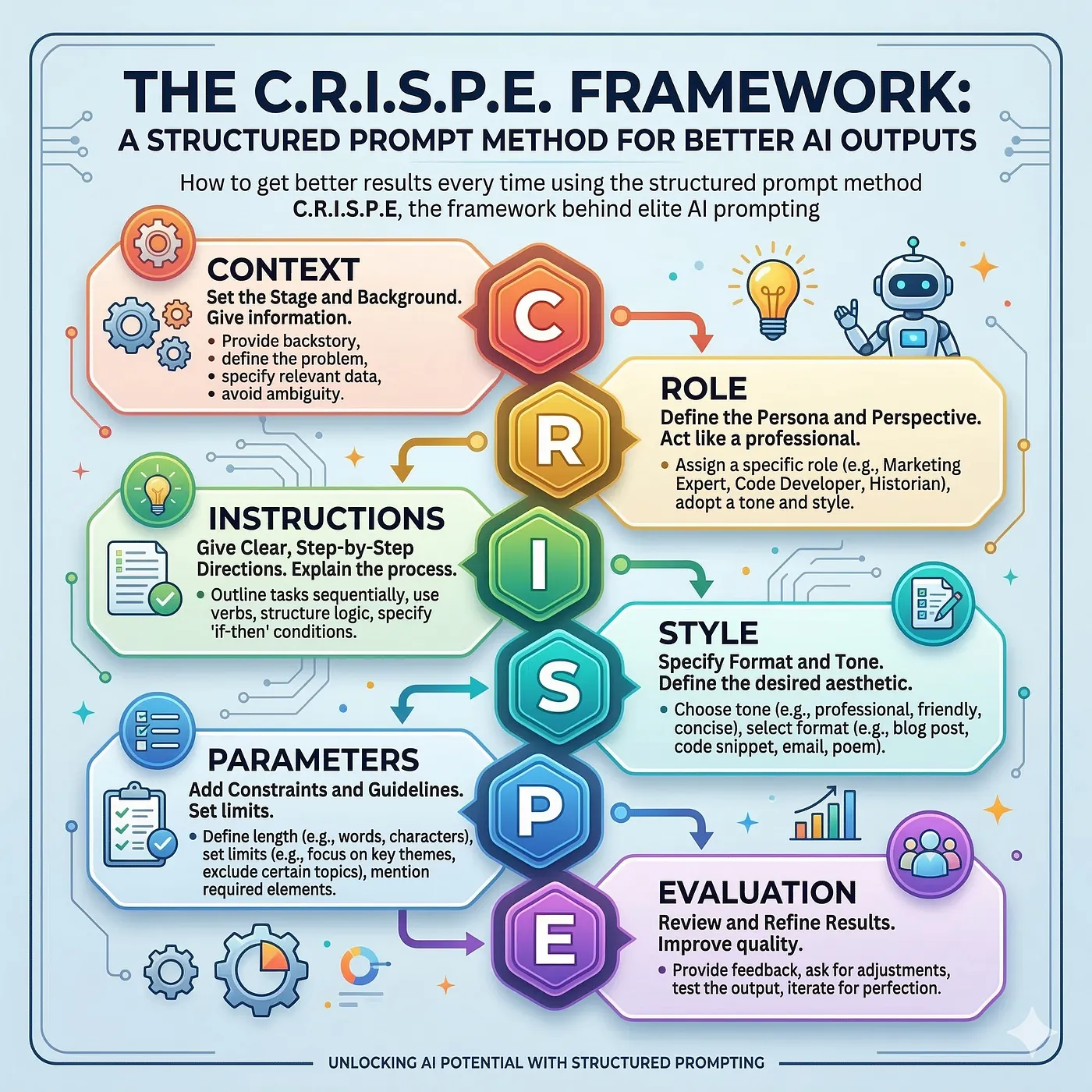
All prompts follow the CRISPE principles. Context, Role, Instruction, Style, Parameters, Examples.
It's best to pair this with sectioned requests. Providing too many design details to AI to create only makes it worse.
Breaking prompts down into single screens or core chunks of functionality, and incrementally building them out, sometimes by separate agents sharing context, is much more effective than giving one agent everything in one big hit.
Gotta be C.R.I.S.P.E
All prompts follow the CRISPE principles. Context, Role, Instruction, Style, Parameters, Examples.
It's best to pair this with sectioned requests. Providing too many design details to AI to create only makes it worse.
Breaking prompts down into single screens or core chunks of functionality, and incrementally building them out, sometimes by separate agents sharing context, is much more effective than giving one agent everything in one big hit.
Design as an Accelerant
Reflecting on all the opportunities and challenges that AI presents, the importance of rethinking how design works is critical.
We have moved to Design constantly collaborating directly in code with Engineers and helping to lighten the load specifically for front end code.
We are utilising parallel agents to analyse documentation to extract and generate helpful artefacts.
Some examples are Jobs To Be Done, Personas, Capability Maps, Data Mapping, Design Documents, Research Plans, and Discussion Guides.
Design, to-date, has been used as a high-care tool for clarity, problem solving, and detailed designs.
Now, design can speed up Product Managers by rapidly bringing to critical insights from research, analytics, regulation, requirements, and competitor analysis into human and machine consumable artefacts.
And it has now become an real-time collaborator with engineering and creator of functional front-end code.
Design as an Accelerant
Reflecting on all the opportunities and challenges that AI presents, the importance of rethinking how design works is critical.
We have moved to Design constantly collaborating directly in code with Engineers and helping to lighten the load specifically for front end code.
We are utilising parallel agents to analyse documentation to extract and generate helpful artefacts.
Some examples are Jobs To Be Done, Personas, Capability Maps, Data Mapping, Design Documents, Research Plans, and Discussion Guides.
Design, to-date, has been used as a high-care tool for clarity, problem solving, and detailed designs.
Now, design can speed up Product Managers by rapidly bringing to critical insights from research, analytics, regulation, requirements, and competitor analysis into human and machine consumable artefacts.
And it has now become an real-time collaborator with engineering and creator of functional front-end code.